
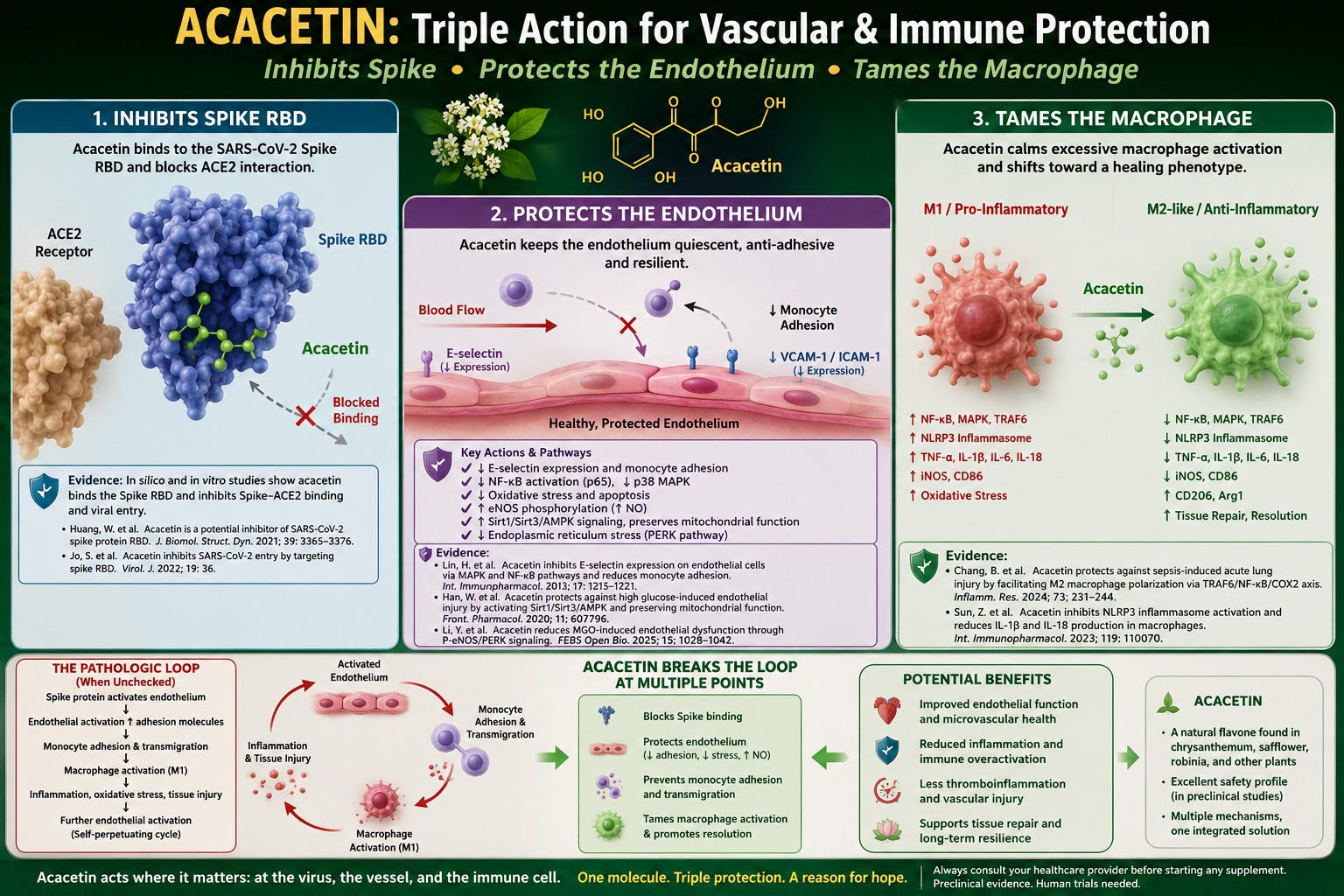
Acacetin is a flavone which, surprisingly, is NOT a household word. You will generally only encounter “Acacetin” if you are reading peer-reviewed biochemistry journals, studying traditional plant-based medicines, or working in organic chemistry labs. Yet, it SHOULD be a household word. It is remarkable.
Acacetin (5,7-dihydroxy-4′-methoxyflavone; Fig. 1 synonym linarigenin), a plant-derived flavonoid, has recently gained attention worldwide due to its diverse biological activities, including in vitro neuroprotective, cardioprotective, anti-ageing, anticancer and antimicrobial properties (Zhou et al., 2014). The molecule has been reported to inhibit several important and clinically-relevant enzymes, including monoamine oxidase B (Han et al., 1987), human topoisomerase-I (Boege et al., 1996), glutathione reductase (Zhang et al., 1997), cyclo-oxygenase (COX) I/II (Liao et al., 1999), acetylcholinesterase (Lim et al., 2007), aromatase (Zhao et al., 2008), aldose reductase (Manivannan et al., 2015) and xanthine oxidase (Rauf et al., 2016). A number of pharmacological studies has also confirmed its potential role in the treatment of viral diseases, inflammatory conditions, oxidative stress, malaria and cell proliferation, with few toxic reactions (Pan et al., 2005; Kim et al., 2015).
Acacetin—A simple flavone exhibiting diverse pharmacological activities
https://www.sciencedirect.com/science/article/abs/pii/S1874390019301247
In addition to the impressive resume above, Acacetin offers three very important benefits for treating/preventing damage and disease caused by SARS-CoV-2 and its Spike Protein. First, Acacetin has demonstrated a promising ability to bind the Spike RBD in molecular docking and molecular dynamics studies, raising the possibility that it could interfere with Spike-mediated cellular entry.
The present study revealed a noticeable interaction of GLY446, SER477, GLY482, THR500 and LEU518 residues with mutant of spike receptor binding domain protein were observed. From MM-PBSA results it was observed that, acacetin acts as good inhibitor towards main protease. From molecular docking study and molecular dynamics study revealed that, the compound acacetin shows promising inhibitor towards both main protease as well as mutant spike RBD of SARS-CoV-2 protein.
Evaluation of binding performance of bioactive compounds against main protease and mutant model spike receptor binding domain of SARS-CoV-2: Docking, ADMET properties and molecular dynamics simulation study
https://www.sciencedirect.com/science/article/pii/S0019452222000796
Next, Acacetin has the ability to make activated endothelium less adhesive to circulating monocytes—the critical first step before transmigration and subsequent macrophage accumulation in tissue. As we know, this is a very important step in the Smoldering Macrophage Syndrome and Cancer Metastasis Analogy models. Acacetin inhibits NF-κB, which also happens to be activated by the Spike Protein.
Since E-selectin-mediated adhesion of leukocytes or tumor cells to the vascular endothelium is a key early event in the initiation of inflammatory response and cancer metastasis, E-selectin inhibition is thought to be a good target for therapeutic intervention. Several flavones have been shown to have anti-inflammatory and anticancer properties. In the present study, we investigated the effects of plant flavones on expression of E-selectin in human umbilical vein endothelial cells. Among 11 flavones, acacetin strongly inhibited TNF-α-induced E-selectin expression in HUVECs. Acacetin suppressed the TNF-α-induced phosphorylation of p38 but did not inhibit TNF-α-induced phosphorylations of JNK and ERK. Acacetin also inhibited the activation of NF-κB by stimulation with TNF-α. Furthermore, adhesion of monocytes to TNF-α-treated endothelial cells was inhibited by cotreatment with acacetin. These results suggest that acacetin inhibits the expression of E-selectin by regulation of the p38 MAPK signaling pathway and activation of NF-κB.
Acacetin inhibits expression of E-selectin on endothelial cells through regulation of the MAP kinase signaling pathway and activation of NF-κB
https://www.tandfonline.com/doi/10.3109/08923973.2013.811596
Further protection is afforded to the endothelium by Acacetin as it protects against direct endothelial injury from hypertension. This is particularly interesting because mitochondrial dysfunction, oxidative stress and impaired endothelial signaling are also features reported in Spike-associated endothelial injury (SPED).
In conclusion, our study revealed the links between endothelial dysfunction and mitochondria-dependent apoptosis in mesenteric arteries from SHR (Figure 7). Acacetin apparently normalized the abnormal mitochondrial morphology, protected against oxidative stress induced mitochondrial dysfunction by inhibiting the opening of mPTP, improved mitochondrial dynamics by regulating the balance between DRP1 and OPA1, inhibited excessive ROS generation-induced endothelial cell apoptosis and AKT/eNOS inactivation, and subsequently reversed the decreased endothelium-dependent dilation in hypertension.
Restoration of Mitochondrial Function Is Essential in the Endothelium-Dependent Vasodilation Induced by Acacetin in Hypertensive Rats
https://pmc.ncbi.nlm.nih.gov/articles/PMC9569784/
One other way Acacetin may ameliorate Smoldering Macrophage Syndrome, or Long COVID, is by attacking the transmigrating macrophage problem from the other direction. Acacetin can help macrophages inhibit the inflammatory M1 phenotype and polarize to their M2-like (inflammatory suppressive) phenotype. In other words, even if inflammatory monocytes do get recruited, Acacetin may help prevent their transition into a highly inflammatory macrophage state.
Results showed that acacetin dramatically suppressed the production of TNF-α, IL-1β, and IL-6. These above results indicated that acacetin attenuated sepsis-induced ALI by inhibiting the inflammatory response. Moreover, acacetin inhibited the expression of markers for M1-type (iNOS, CD86) macrophages and promoted the expression of markers for M2-type (CD206, Arg1) macrophages by western blot. In addition, acacetin down-regulated the expression TRAF6, NF-κB, and Cyclooxygenase-2 (COX2) by western blot.
Acacetin protects against sepsis-induced acute lung injury by facilitating M2 macrophage polarization via TRAF6/NF-κB/COX2 axis
https://pmc.ncbi.nlm.nih.gov/articles/PMC10720600/
Now we can see why I find Acacetin so compelling. Acacetin is interesting because it appears to approach the endothelium-macrophage problem (Spike Feed-Forward Loop) from both directions.
Protect the endothelium.
Calm the macrophage.
Break the cycle.
That is exactly the kind of mechanism I like to see on a Friday. And perhaps another small reason for hope. Of course, always consult your primary care provider before using any medication or supplement.
Thank you, as always, for your readership, dialogue, and support. We have gained another new paid subscriber since Monday. Please have a blessed weekend.
One-Time Donation
https://buy.stripe.com/6oUbJ0auFaWkcLs2ZXeUU00
A Google ask,
Acacetin is naturally distributed across more than 90 different plant species. It primarily exists within their flowers, leaves, and roots, often in the form of glycosides (sugar-bound complexes). [1, 2, 3]
Drinking herbal infusions is one of the most accessible ways to consume acacetin. The top tea sources include:
* Chamomile Tea (Matricaria chamomilla): The dried flower heads used to brew chamomile tea are among the highest dietary sources of acacetin. [4]
* Chrysanthemum Tea (Chrysanthemum morifolium): This popular East Asian herbal tea, made from dried chrysanthemum blossoms, naturally contains an abundant amount of acacetin. [3, 5]
* Damiana Tea (Turnera diffusa): The leaves of this wild shrub are commonly brewed as a traditional herbal tea and are heavily researched for their high concentration of the flavone. [2, 6]
* Greek Mountain Tea (Chamaemelum nobile / Roman Chamomile): Part of the broader chamomile and daisy family, it serves as another reliable herbal infusion source. [1]
* [Green Tea](https://www.google.com/search?kgmid=/m/01mzvs&q=Specific+plant+sources+and+teas) (Camellia sinensis): While primarily famous for its catechins, standard green tea leaves also yield a minor trace amount of dietary flavones like acacetin. [1, 2]
*
Beyond beverages, you can find acacetin in various edible plants, herbs, and trees:
* Fresh Herbs & Spices: Thyme, rosemary, and oregano contain measurable levels of the compound. Fresh parsley leaves (Petroselinum crispum) also top the list of green culinary sources.
* Black Locust (Robinia pseudoacacia): The aromatic, edible flower clusters of this tree are historically famous in chemistry for being the original source where researchers first isolated pure acacetin.
* Artichoke (Cynara scolymus): Both the edible buds and specialized artichoke leaf extracts contain the flavone.
* Citrus Peels: The outer zest of citrus fruits, particularly bitter oranges, holds a modest concentration. [4, 7, 8, 9]
* Avoid Excessive Boiling: Acacetin can degrade under prolonged, aggressive heat. It is best to gently simmer your herbs or steep your herbal teas in hot water rather than keeping them at a rolling boil.
* Pair with Healthy Fats: Acacetin is highly lipophilic (fat-soluble) and has very low natural water solubility. Consuming it alongside a meal containing healthy oils or adding a small dash of ghee or coconut oil to your herbal brew can noticeably improve how efficiently your body absorbs it. [1, 3, 4, 8, 10]
[1] [https://pmc.ncbi.nlm.nih.gov](https://pmc.ncbi.nlm.nih.gov/articles/PMC11509893/)
[2] [https://pmc.ncbi.nlm.nih.gov](https://pmc.ncbi.nlm.nih.gov/articles/PMC11509893/)
[3] [https://www.frontiersin.org](https://www.frontiersin.org/journals/pharmacology/articles/10.3389/fphar.2025.1493981/full)
[4] [https://ask-ayurveda.com](https://ask-ayurveda.com/wiki/article/6423-acacetin)
[5] [https://www.mdpi.com](https://www.mdpi.com/2227-9059/14/1/194)
[6] [https://infospace.mrc.ac.za](https://infospace.mrc.ac.za/bitstreams/b32322ba-f87d-42fa-8f11-980793d34591/download)
[7] [https://ask-ayurveda.com](https://ask-ayurveda.com/wiki/article/6284-acacetin)
[8] [https://ask-ayurveda.com](https://ask-ayurveda.com/wiki/article/6284-acacetin)
[9] [https://ask-ayurveda.com](https://ask-ayurveda.com/wiki/article/6423-acacetin)
[10] [https://ask-ayurveda.com](https://ask-ayurveda.com/wiki/article/6284-acacetin)
I wonder if Acacetin would reduce plaque formation by addressing the LDLC adhesion/infiltration to endothelium that the lipid hypothesis enthusiasts keep telling us causes Atherosclerosis.